
✅ Key Takeaways
- Solar covers and solar rings are the most affordable way to heat an above-ground pool.
- DIY solar heaters and black hose systems provide free heating using sunlight.
- Heat retention is as important as heat generation—insulate and cover your pool.
- Gas and electric heaters work fast but cost more to run compared to solar options.
- Combining methods, like a solar cover and a black hose system, can maximize savings.
Introduction
Swimming in a chilly pool isn’t much fun, even in summer. If you own an above-ground pool, you’ve likely wondered: What is the cheapest way to heat an above ground pool?
The good news is there are several low-cost solutions that keep your pool warm without draining your wallet. From solar covers to DIY solar heating systems, this guide explores the most budget-friendly ways to raise your pool’s temperature and keep it comfortable all season.
Why Heating Your Pool Matters
A comfortable pool temperature makes swimming enjoyable and extends your pool season by weeks. Without a heating strategy, water can feel too cold—especially in early spring and late summer. Traditional heaters can be expensive to install and operate, so finding cheaper alternatives is essential for above-ground pool owners.
1. Solar Covers: The Easiest and Cheapest Solution
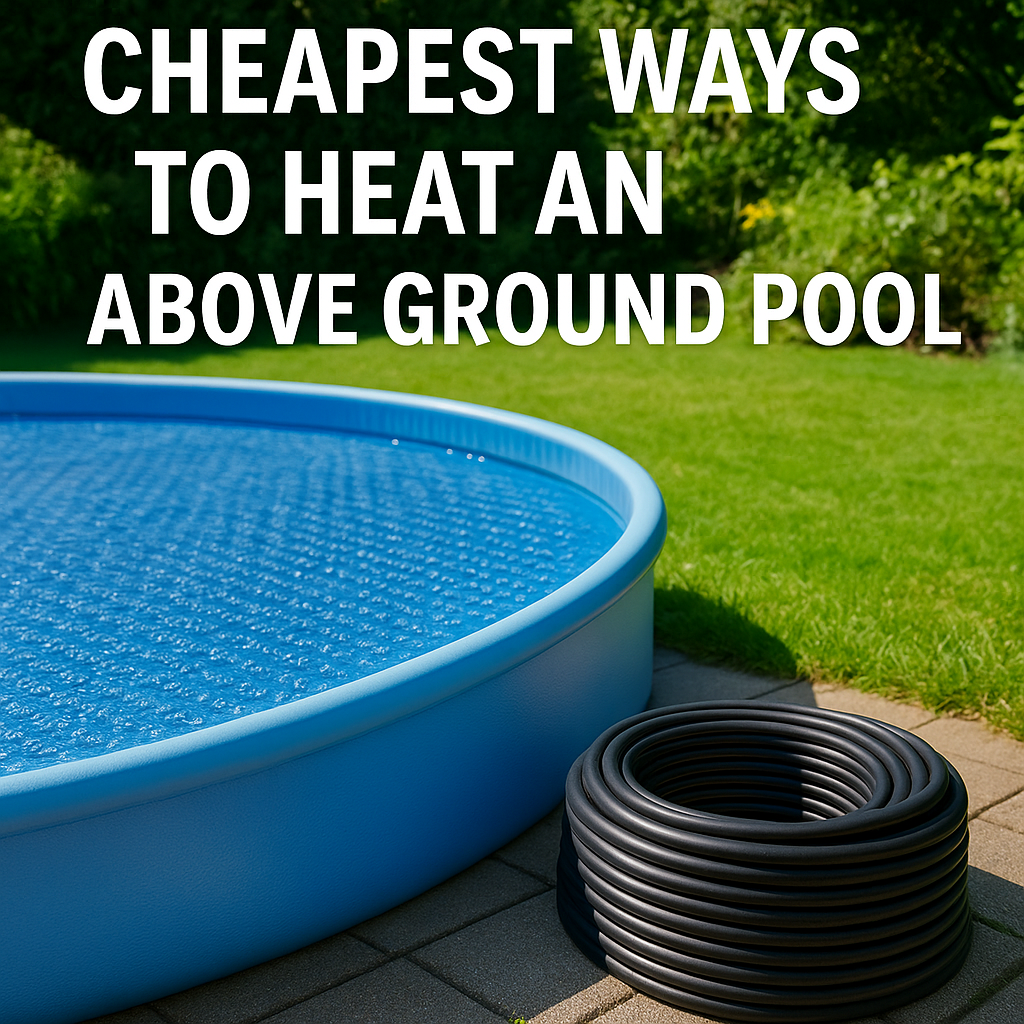
Solar covers, also called solar blankets, are the most cost-effective heating method. These covers trap the sun’s heat during the day and prevent heat loss at night.
They work like a greenhouse, raising water temperature by 5–10°F over time. Besides warming your pool, solar covers reduce evaporation, which helps maintain water levels and save on chemicals.
For even more savings, use solar rings or liquid solar blankets, which are smaller but still help retain heat.
Get your solar pool cover here
2. DIY Black Hose Solar Heating System
If you want an ultra-cheap heating solution, consider building a black hose solar heater. Here’s how it works:
- Use a long coil of black garden hose connected to your pool pump.
- Place the hose in a sunny spot, so it absorbs heat.
- Pump pool water through the hose before returning it to the pool.
This simple system uses free solar energy and can raise water temperature significantly. The cost is minimal—just the price of the hose and a few connectors.
3. Solar Panels for Pools
For a more advanced solar heating solution, consider solar panels designed for pools. These panels sit on your roof or yard and circulate water through sun-heated tubing.
While the upfront cost is higher than a solar cover, they have zero operating cost and can last for years, making them a smart long-term investment.
4. Heat Pumps vs. Gas Heaters
Electric heat pumps and gas heaters are effective, but they are not the cheapest option. Gas heaters warm water quickly but cost a lot in fuel. Heat pumps use less energy but still add to your electricity bill.
If your goal is purely low-cost heating, stick to solar solutions and DIY systems.
Read our article can I add a hot tub heater to an above ground pool here
5. Heat Retention: Don’t Lose the Warmth
Heating the pool is only half the battle—keeping the heat in is equally important. Always:
- Cover your pool at night.
- Use windbreaks or fences to reduce heat loss.
- Insulate your pool walls if possible.
Combining heat generation with heat retention ensures maximum efficiency.
Other Affordable Tricks
- Dark Pool Liners: Absorb more sunlight than light-colored liners.
- Floating Solar Rings: Work well in smaller pools and complement covers.
- Adjust Pump Timing: Run pumps during sunny hours to circulate warm water.
Conclusion
So, what’s the cheapest way to heat an above-ground pool?
Start with a solar cover, then consider adding a DIY black hose solar system for extra warmth. For those planning long-term, solar panels are worth the investment. With these low-cost methods, you can enjoy a warm, inviting pool without shocking your utility bill.




0 Comments